Last updated on June 15th, 2026 at 10:51 am
Reading the French press is not just about staying informed. It also means stepping into a world of opinions, culture, and debates that reflect the richness of French society. For learners of French as a foreign language, it is a valuable gateway to full immersion: you discover new words, vibrant expressions, and you dive into the everyday life of the French.
Freedom of the Press: A Foundational Principle
Freedom of the press is considered in France a pillar of democracy. Its roots go back to the Declaration of the Rights of Man and of the Citizen of 1789, which proclaims freedom of expression as a fundamental right.
The key reference law is that of July 29, 1881, which regulates the press and guarantees journalists the ability to publish freely, within certain limits (for example, defamation, respect for privacy, or incitement to hatred).
Even today, France regularly appears in the rankings of Reporters Without Borders (RSF) among the countries where press freedom is protected. This does not mean that debates do not exist, but the idea remains strong: the press must be able to inform without censorship.
The Different Types of Press in France
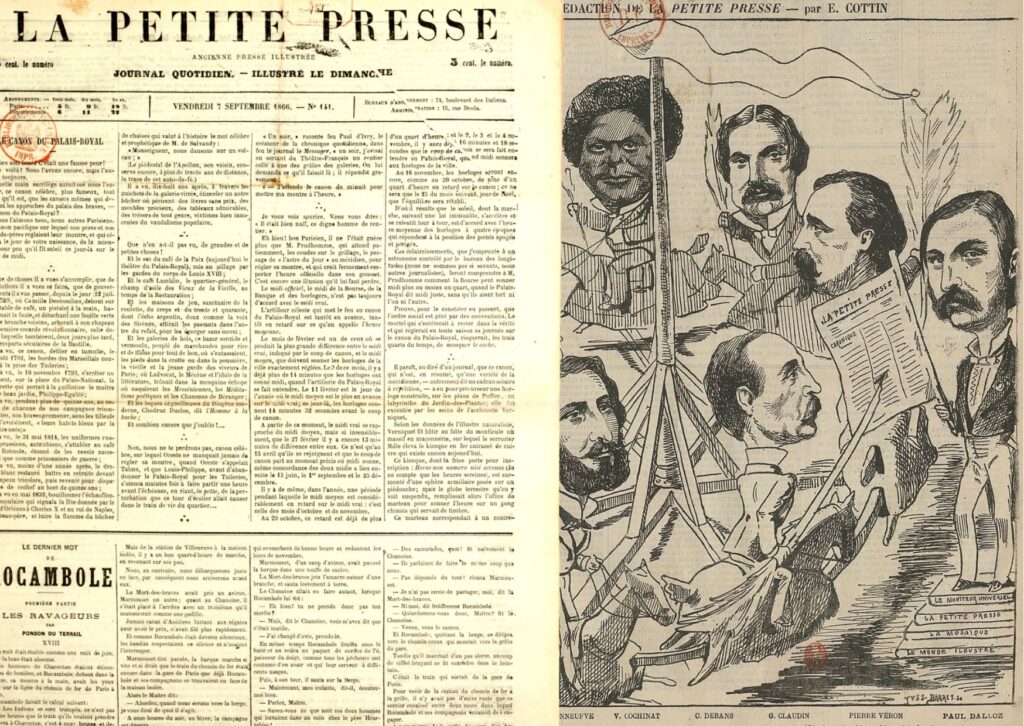
The French press is very diverse and reflects the many facets of society.
National daily press: Titles such as Le Monde, Le Figaro, and Libération. These newspapers cover national and international news and are references for many readers.
Regional daily press: Extremely important in France. Papers like Ouest-France (the most read in the country), La Dépêche du Midi, or Nice-Matin report on local life, regional events, and offer another perspective on French daily life.
Specialized magazines: Sport, fashion, science, gastronomy, travel, music… An incredible variety of publications exist. For a learner, choosing a magazine related to their passion is an excellent way to improve French while enjoying the process.
Online press: As everywhere in the world, digital media has transformed habits. The French increasingly read on smartphones, through apps, newsletters, or press-related podcasts.
The Press and Daily Life in France
Reading the newspaper at a café, flipping through a magazine on the train, receiving a newsletter on your phone: the press is everywhere.
Traditionally, the ritual was to buy a paper newspaper every morning at the bakery or kiosk. Today, habits are changing: most readers get their news online. Yet, print is still alive, especially in regional press and specialized magazines.
The press holds a special place in French culture: it is not just a means of information but also a tool for debate, a platform for opinions, and a mirror of major social issues.
Reading the Press to Learn French
For a learner, the French press is a fantastic resource.
Articles are short, which makes reading less intimidating than a novel.
They contain lively vocabulary tied to daily life, very different from that in textbooks.
You can choose sections that suit your level: politics or economics may be complex, but culture, sports, gastronomy, or travel pages are much more accessible and engaging.
Reading just one article per week in French is already progress. Even if you don’t understand everything, the context helps a lot. Little by little, you recognize words, get used to structures, and the language feels more natural.
The Live French Approach: Immersion Through the French and Francophone Press
At Live French, we believe in authentic immersion. That is why we use resources designed for native speakers: press articles, videos, songs, cultural excerpts.
The Live French Médiathèque gathers these authentic documents and makes them available to learners. Each resource is accompanied by guidance to help understand vocabulary, grasp expressions, and make the most of the content.
This is the key difference: you are not working with artificial texts created for students but with real documents that reflect French life and culture. French conversation courses hen become far more motivating and effective.
The press in France is at once a reflection of democracy, a daily ritual, and a cultural treasure. It is also a unique learning tool for foreigners who want to improve their French.
Reading the press means stepping into real French life, with its passions, debates, and art of living. It means discovering a country from the inside, no longer just through textbooks.
As Albert Camus said:
“La presse libre peut être bonne ou mauvaise, mais sans liberté, elle ne sera jamais autre chose que mauvaise.” (“A free press can be good or bad, but without freedom, it will never be anything but bad.”)
So why not, this week, check out the Live French Médiathèque and choose one article in French, just one, to read at your own pace? You’ll see: each word is a small victory, and each article brings you closer to mastering French.
Perfectionnez votre français – cours d’essai gratuit! Inscrivez-vous ici